Grade I Listed Ford Castle, Berwick-upon-Tweed
Ford Castle is a Grade I listed building situated in Berwick-upon- Tweed, Northumberland originally built around 1278. The castle has witnessed various battles, including the Battle of Flodden 1513, where it was taken by King James IV of Scotland. It has been modified and rebuilt a number of times, but now presents itself largely untouched since the mid 1800’s when it was rebuilt in a Gothic style by Louisa, Dowager Marchioness, widow of the 3rd Marquess of Waterford. The castle was acquired in 1907 by the coal-mining magnate James Joicey, 1st Baron Joicey and it remains in the ownership of his family, although since 1956 it has been leased to Northumberland County Council as a residential centre for outdoor pursuits.
We were engaged in the restoration of many of the castle’s original iron framed, leaded windows. A great number of windows were found to be corroded, many of them severely. These were carefully removed and transported to Calibre’s workshops for full restoration. Where needed, the corroded iron glazing bars, drips, and window furniture were replicated and replaced with precision, maintaining historical accuracy, however we retained and repaired as much of the historic ironwork as possible. Less severely damaged windows were restored in situ. Leaded lights were restored throughout with new matching cames and replica glazing where required.
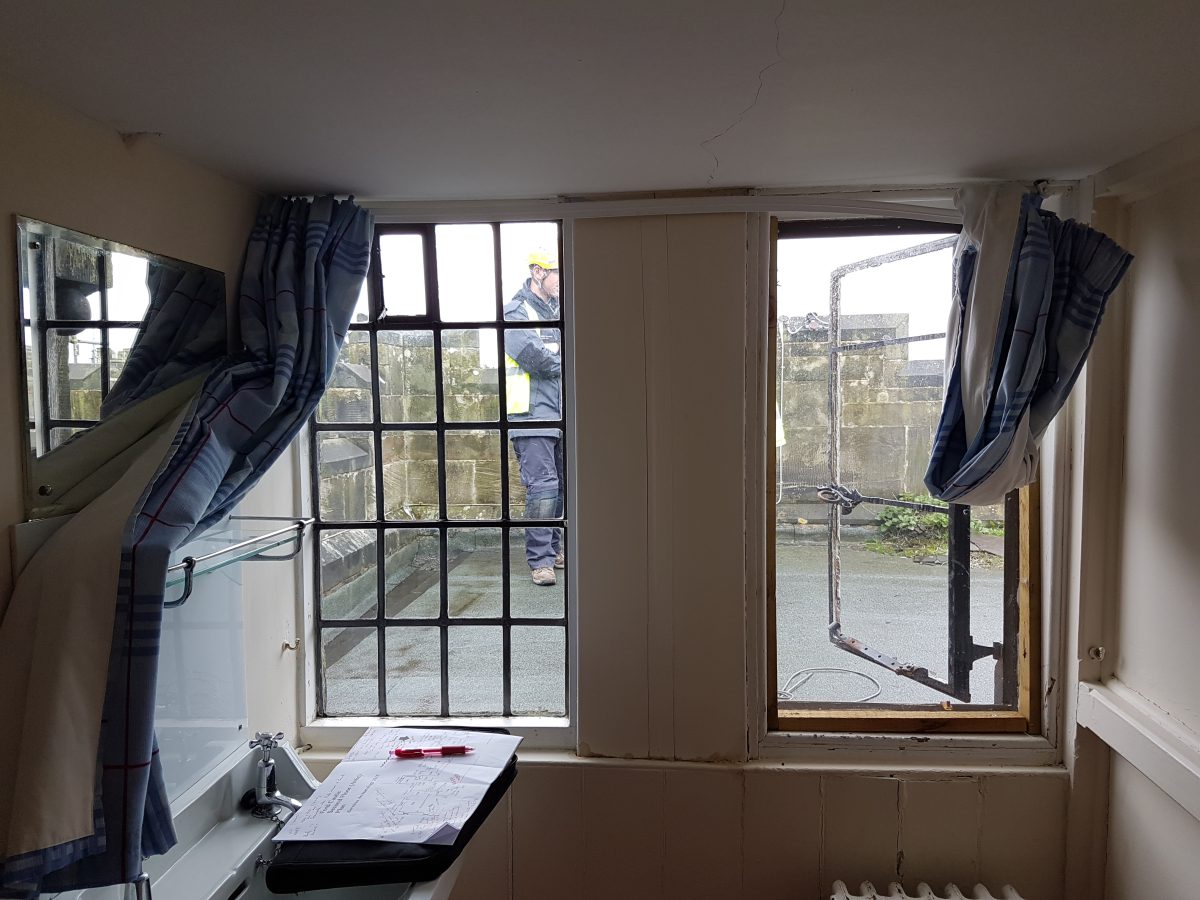
This pair of leaded light windows, like many others, had experienced significant deterioration over time. Several original leaded panes had been lost and replaced with single pieces of float glass, disrupting the historic appearance and integrity. Prolonged exposure to the elements had led to water ingress and corrosion, resulting in rust heave and distortion of the frames. In many cases this had caused breakage of individual glass pieces and warping of the lead cames. Additionally, many of the lead cames had become brittle and cracked due to age, contributing to drafts and reducing the overall stability of the structures.
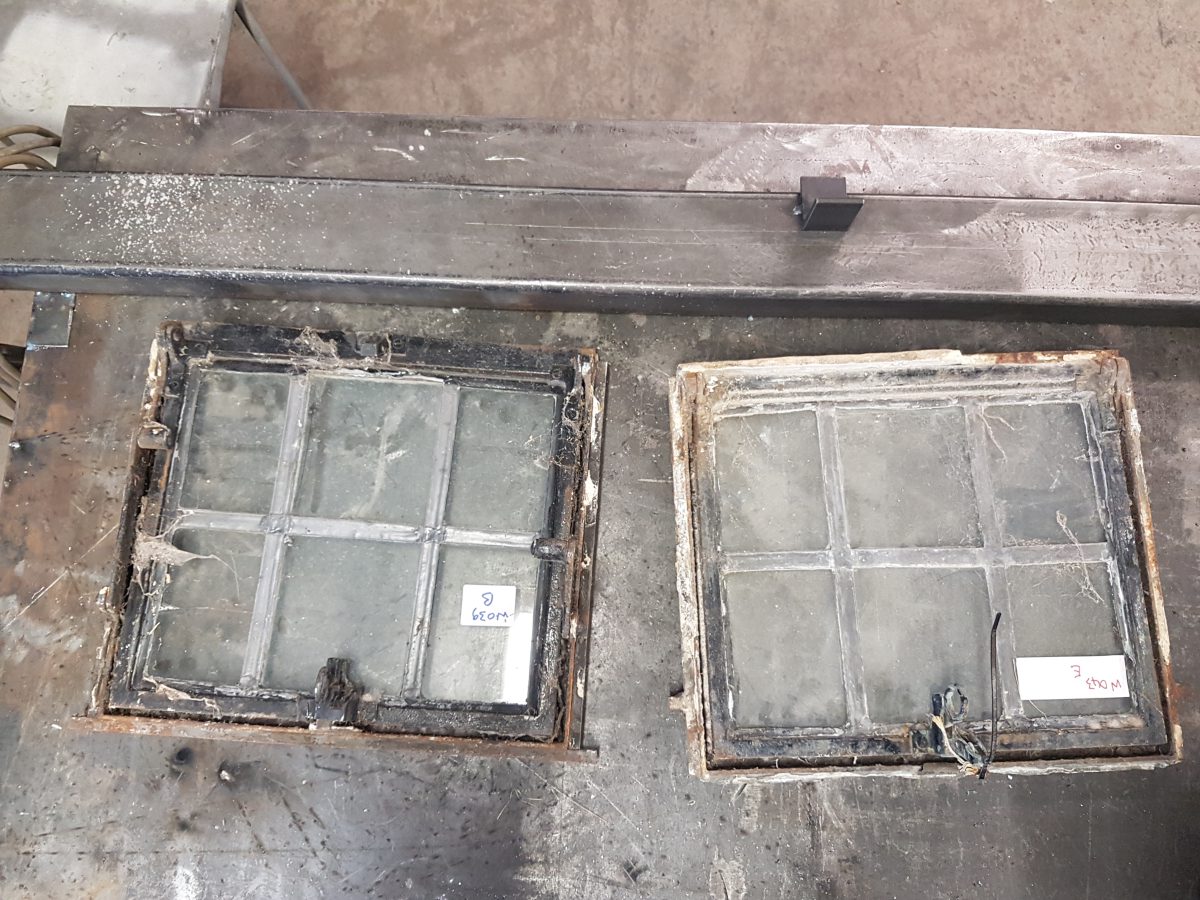
These example opening light frames were removed for restoration and clearly illustrate the corrosion we faced. Many opening lights were seized completely, whilst others had been sealed closed as their hinges, catches etc were broken, missing or in very poor condition. Some frames had lost their glazing and saddle bars entirely.

Refurbished iron window frames ready for glazing. All windows were finished in our heritage approved three coat system once all the repairs had been undertaken in house.
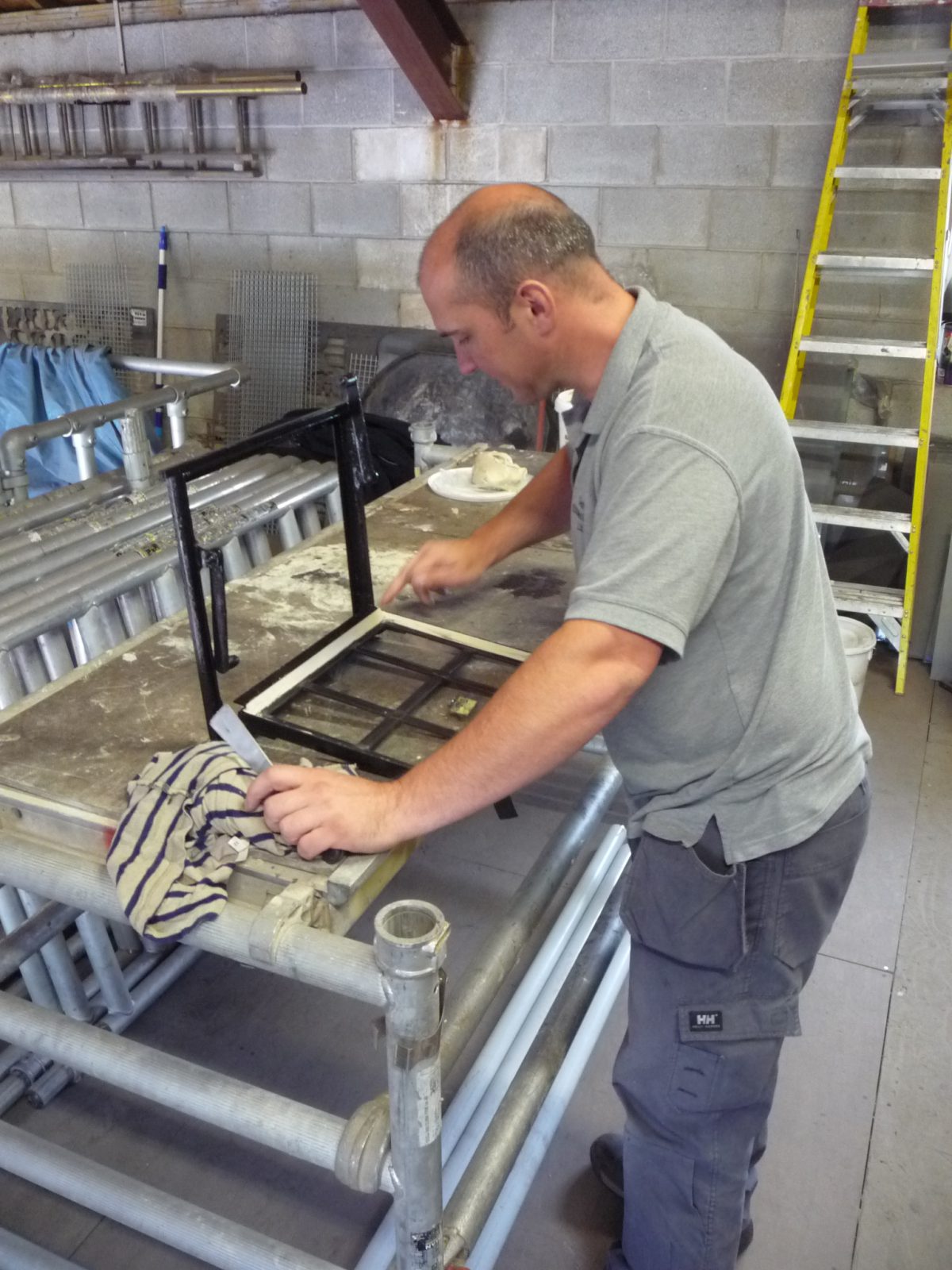
Window frames were glazed in our workshop by our specialist subcontractor, Cheshire Stained Glass. Where necessary, broken panes were replaced with hand-blown glass carefully matched to the original. Wherever possible, original panes were cleaned, reused, and meticulously rebuilt using new, matching lead came.

The windows were reinstated by our in house site team. Where in-situ restoration was carried out, the same high-quality finish was applied to all accessible areas upon completion of the necessary repairs.
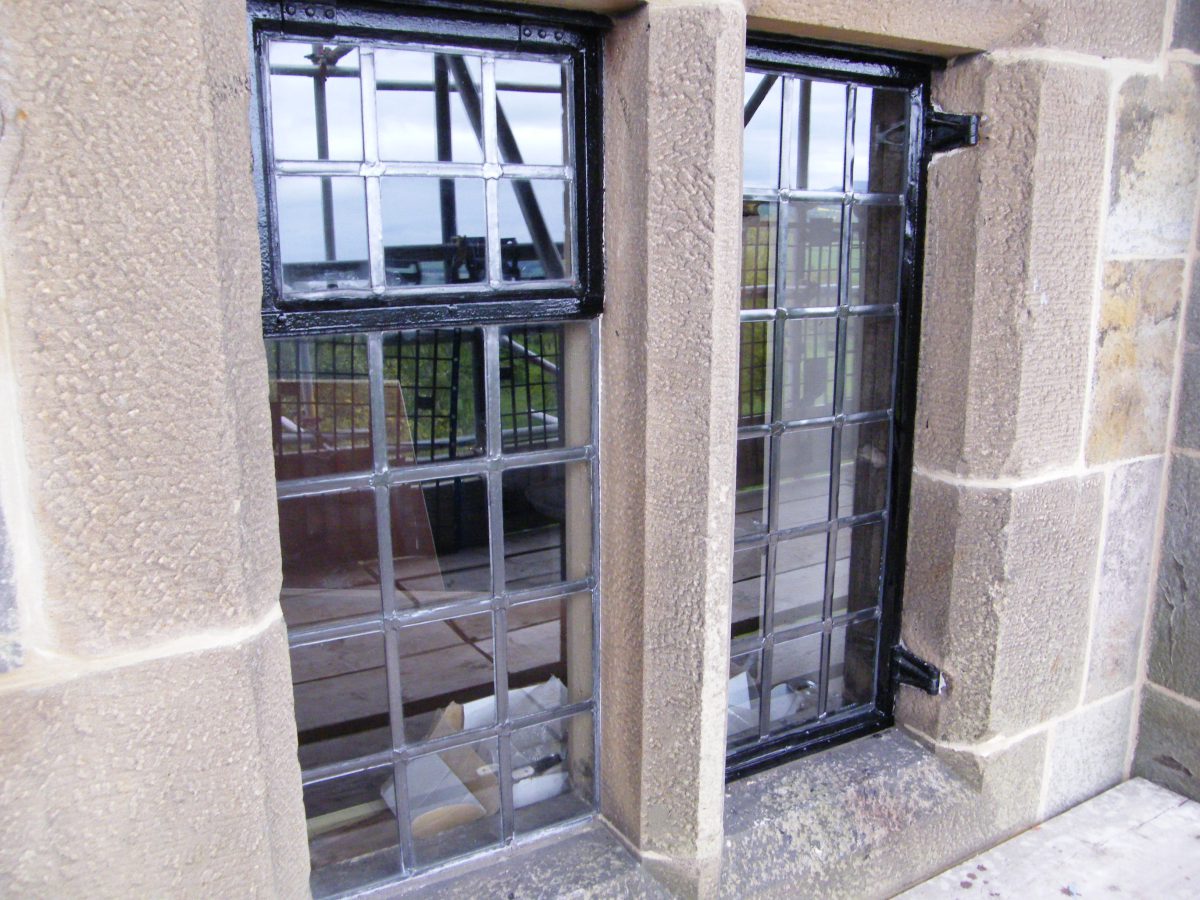
An example of a finished restored window set.
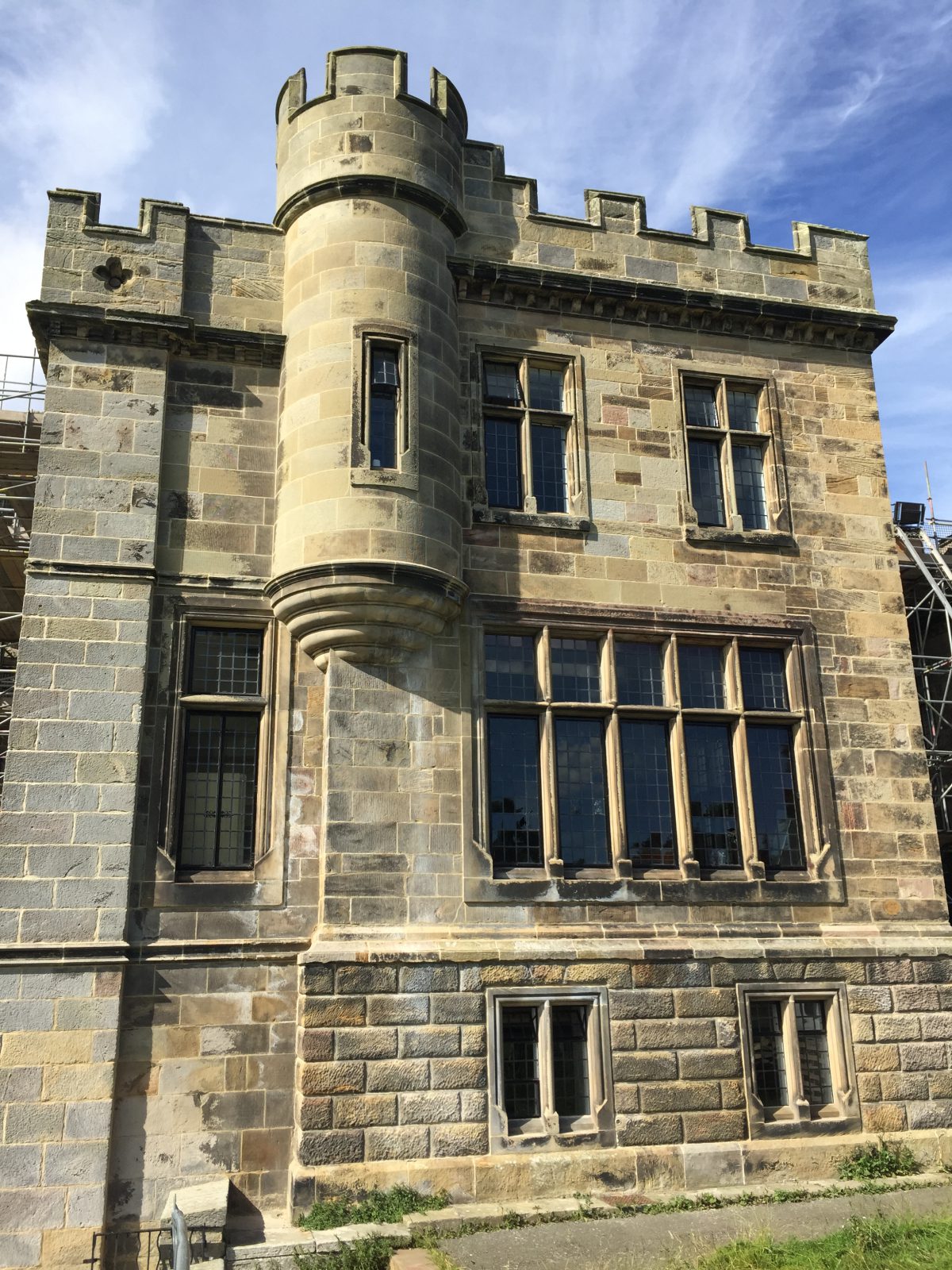
The windows looked resplendent in the evening sun.
Our Clients
Our clients include local authorities, public bodies, heritage trusts, architects, main contractors and private clients. We operate throughout the UK depending on the size and nature of projects.


